The Maruti Baleno facelift is a mid-cycle update and is considered one of India’s best-selling top-class hatchbacks. It brings a refreshed exterior, a richer interior, stage-2 ADAS, and the equal 1.2-litre petrol engine with costs predicted among ₹6.5 lakh and ₹10 lakh (ex-showroom). The Baleno has earned its region inside the Indian marketplace. Maruti Suzuki sells it constantly, and customers prefer coming lower back for its combination of value, refinement, and reliability. The 2026 facelift pushes that formula in addition—sharper, more technology, and protection features that were once reserved for a lot more expensive cars.
Maruti Baleno Facelift price and release date:
The latest Maruti Baleno facelift is expected to release in mid-2026. Costs are expected to start around ₹6.5 lakh and move up to about ₹10 lakh (ex-showroom), relying on the variant. That puts it inside the equal bracket because the contemporary version, with a modest top class for the brought features. Maruti Suzuki typically costs the Baleno competitively towards the Hyundai i20 and Honda Jazz, and the facelift is probably to maintain that strategy. Anticipate the very last pricing to be shown closer to the respectable release.
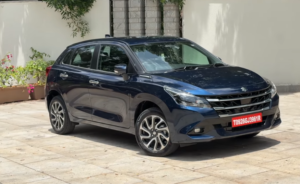
Design: What Changes on the Outside
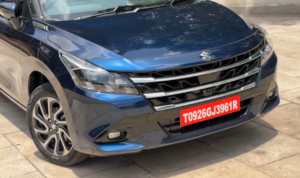
The Baleno facelift gets an exceptionally up-to-date front. anticipate a wider grille, restyled LED headlamps, and a bumper with a more established appearance. The overall silhouette remains identical; Maruti isn’t changing what already works, but the front fascia looks more assertive than the modern car. At the rear, the changes are subtler. Up-to-date tail lamp images and a revised bumper supply the car an end. New alloy wheel designs also are expected throughout higher editions. The result is a car that appears fresher without losing the recognizable Baleno form.
Interior: More Refinement Inside
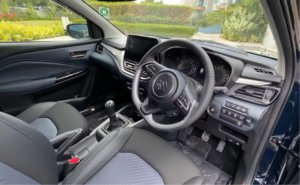
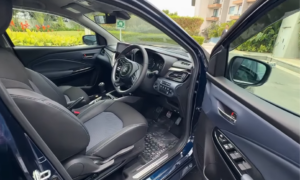
Step inside the new Baleno and the improvements are easy to spot. The dashboard is expected to get updated trim materials, a revised center console layout, and improved soft-touch panels in key areas. These are the kinds of changes that make the cabin experience more premium day to day. The seat upholstery is probably to be upgraded on top versions, and ambient lights may also be characteristic of better trims. The overall layout stays familiar, which is a realistic desire; the Baleno’s cabin has usually been well noted out, and there is no reason to overhaul what consumers already discover at ease.
Features:
The Maruti Baleno facelift is expected to carry ahead the SmartPlay Pro+ infotainment system, a 9-inch touchscreen with Wi-Fi Android Auto, and Apple CarPlay. A head-up show, a 360-diploma camera, and an updated instrument cluster with a larger virtual readout are likely at the Zeta and Alpha versions.
Other expected features include:
- Automatic climate control
- Wireless phone charging
- Auto-dimming IRVM
- Voice-enabled controls
- Connected car technology via the Suzuki Connect platform
The feature list places the Baleno facelift well ahead of many similarly priced competitors, especially on the top trim.
Level-2 ADAS: How It Works and What It Does
This is the biggest addition to the new Baleno. Level-2 ADAS, Advanced Driver Assistance Systems, gives the car a set of features that actively help you drive more safely. You still control the car, but the system monitors the road and steps in when needed.
Here is what Level-2 ADAS means in practical terms:
- Lane departure warning and Lane Preserve Assist: The car alerts you if you drift out of your lane and applies a mild correction.
- Adaptive Cruise Management: maintains a hard and fast pace and routinely slows down if an automobile ahead gets too close.
- Self-sustaining Emergency Braking (AEB): detects an obstacle and applies the brakes if you do not react in time.
- Blind Spot Detection: warns you when an automobile enters your blind spot during lane modifications.
- Rear cross-traffic alert: beneficial when reversing out of a parking space.
Baleno ADAS features are expected to be offered on the Zeta and Alpha variants. This is a meaningful addition at this price point; most cars with this level of assistance cost significantly more.
Safety:
The Maruti Baleno 2026 is built on the Heartect platform, which is designed to distribute crash energy away from occupants. The facelift retains this foundation and is expected to include six airbags as standard across all variants, a step up from the current model’s lower-trim setup.
Additional safety equipment includes:
- ABS with EBD
- Electronic Stability Program (ESP)
- Hill Hold Control
- ISOFIX child seat anchors
- Tyre Pressure Monitoring System (TPMS)
With six airbags and the ADAS suite, the Baleno facelift makes a strong case on safety, an area where the outgoing model had room to improve.
Engine and Transmission Options
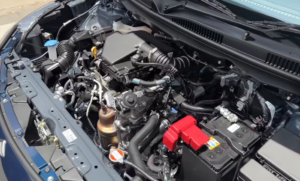
The Maruti Baleno facelift uses the same 1.2-litre DualJet petrol engine that powers the current car. This engine produces 90 PS and 113 Nm of torque. It is a proven unit, smooth, reliable, and well-suited to both city driving and highway use.
Transmission choices are:
- 5-speed manual: standard across most variants
- 5-speed AMT (Automated Manual Transmission): available on select variants for convenience in traffic
There is no hybrid option confirmed for the facelift, though Maruti may offer an idle start-stop system for marginally better efficiency. A CNG variant is also expected, consistent with Maruti’s broader CNG push across its lineup.
Mileage: What to Expect at the Pump
The current Baleno returns around 22.35 km/l on the manual and approximately 22.94 km/l on the AMT, under ARAI test conditions. The facelift is unlikely to change the engine significantly, so real-world mileage should remain in the 16–19 km/l range depending on driving conditions.
For a petrol hatchback in this segment, that is a strong number. If running costs are a priority, the CNG variant will push efficiency even higher, though with the usual trade-off in boot space.
Variants: Which One Should You Consider?
The Baleno facelift is likely to follow a similar variant structure to the current model:
| Variant | Key Highlights |
| Sigma | Base trim, essentials only |
| Delta | Adds touchscreen and basic safety features |
| Zeta | ADAS, 360-degree camera, auto climate control |
| Alpha | Top trim, all features including premium audio |
For most buyers, the Zeta variant offers the best balance. You get ADAS, a full feature set, and six airbags without paying for the top-of-the-line Alpha trim. If budget allows and you want every available feature, the Alpha makes sense.
Rivals: How the Baleno Facelift Stacks Up
The Baleno’s main competition in the premium hatchback segment:
- Hyundai i20: strong feature list, slightly pricier, available with a turbo engine
- Tata Altroz: 5-star NCAP rating, solid build, fewer connected features
- Honda Jazz: now discontinued in India, leaving more room for the Baleno
- Toyota Glanza: essentially a rebadged Baleno, useful if you want Toyota’s service network
The Baleno facelift’s advantage is the combination of ADAS, Maruti’s service network, and competitive pricing. The i20 and Altroz are strong alternatives, but neither matches the Baleno on overall value at this price point. If you are also considering a compact SUV, check out our detailed review of the Maruti Suzuki Brezza ZXi Turbo to compare its performance, features and overall practicality.
Is the Maruti Baleno Facelift Worth Buying?
The new Maruti Baleno facelift does what a good mid-cycle update should do. It fixes gaps in the current model specifically on safety and technology without changing what buyers already like about the car.
Here is a simple way to consider it:
- Buy the Baleno facelift if you need an efficient, feature-rich hatchback with ADAS at a reasonable price, backed with the aid of one of the widest carrier networks in India.
- Remember the i20 if you need a turbo petrol engine or a more assertive driving experience.
- Keep in mind the Altroz if crash test scores are your top priority
For most consumers, especially people who prioritize running costs, reliability, and everyday comfort, the Baleno facelift is a properly rounded choice. The addition of level-2 ADAS at this price bracket is a proper step forward. Look ahead to the respectable launch to confirm the final expenses and version-level features. Then check if the Zeta and Alpha returned before making a decision.